

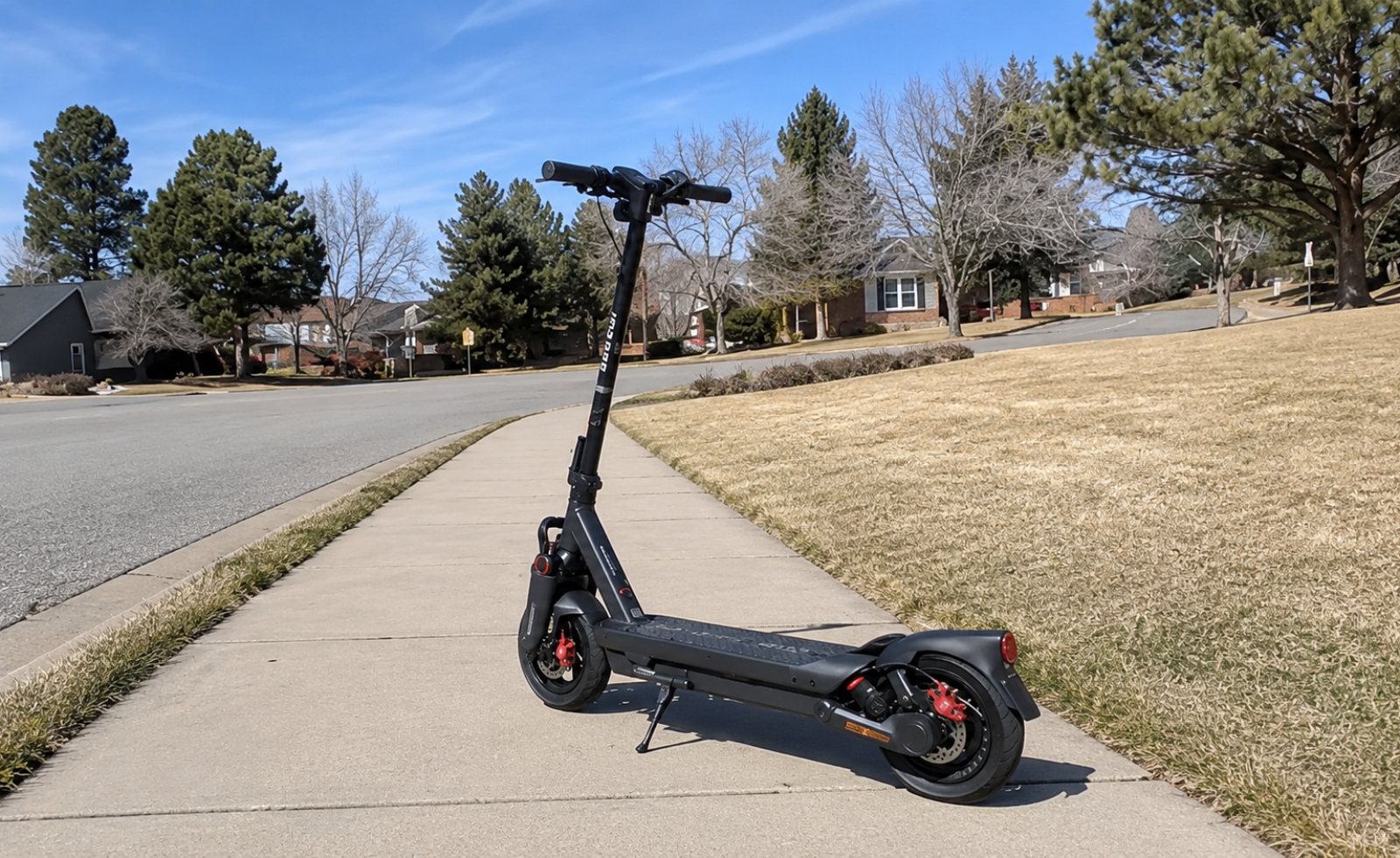
Quick verdict: is the Segway Max G3 worth it?
The Segway Max G3 is a premium commuter scooter built around two things I care about most: ride comfort and high-speed stability. The dual adjustable hydraulic suspension and 11-inch self-sealing tubeless tires make it feel unusually composed over cracks, pothole edges, and rough bike lanes. It also brings modern commuter tech (a smart display, app locking, and Apple Find My integration), and the headline 28 mph top speed gives you breathing room in faster bike lanes.
The tradeoffs are real: it’s heavy, it’s not a “grab-and-go” carry, and owner chatter points to a few recurring annoyances (jerky/rough motor feel for some riders, noises, and occasional support frustration). If you want maximum comfort at commuter speeds and don’t need to carry it up stairs every day, it’s one of the strongest “daily driver” options in Segway’s lineup.
Segway Max G3 real-world specs (what matters in daily riding)
- Top speed (claimed): up to 28 mph
- Claimed range (base): up to 50 miles (expect less in real life)
- Tires: 11-inch tubeless self-sealing
- Suspension: dual adjustable hydraulic suspension (front and rear)
- Brakes: dual disc brakes; Segway highlights a double-action piston design with four pads total
- Smart features: Segway Mobility app, Bluetooth unlock/lock features, Apple Find My integration (regional availability can vary)
- Optional range extender: official 48V external battery accessory (sold separately)
Note on range: Several reviewers estimate real-world range far below the marketing number depending on rider weight, speed, wind, and hills. In other words: treat the 50-mile claim as a best-case scenario, not a commute promise.
Ride quality: where the Max G3 earns its reputation
This is the reason to buy it. The Max G3’s suspension feels like it was designed by someone who actually commutes on rough streets. Instead of the sharp “thwack” you get on stiff commuter scooters, the Max G3 tends to round off impacts. Paired with big 11-inch tires, it’s one of those rides where I arrive less fatigued—especially on longer trips.
Stability is also a highlight. Segway talks about geometry and damping aimed at disturbance resistance, and on the street it translates to a scooter that doesn’t feel twitchy at speed. If you’ve ever ridden a smaller-tired scooter at 20–25 mph and felt it get nervous over uneven pavement, the Max G3’s platform feels much calmer.
Range & battery: what I’d plan for (not the marketing number)
Segway markets a long range, and the Max line historically targets commuters who hate charging anxiety. But in practice, higher speed modes, heavier riders, cold weather, and hills can chop the number down fast.
- My planning rule: If you’re buying this for commuting, plan around a conservative real-world range and keep a buffer for wind, detours, and battery aging.
- External battery: Segway sells an official 48V external battery meant to extend range. Owner discussions are mixed: some like the convenience; others complain about value-for-money, charging behavior, or not getting proportional range gains.
If your commute is truly long (or you can’t charge at work), the external battery can make sense—but only if you’re comfortable with added cost, added complexity, and the reality that real-world range still varies wildly.
Speed & hills: quick commuter power, not a “hyper scooter”
The 28 mph top speed is meaningful for commuters who ride fast bike lanes or want to keep pace safely. Acceleration feels tuned for controlled commuting rather than neck-snapping launches. For hill climbing, it’s generally positioned as stronger than older Max models, but it’s still a single-scooter commuter category machine—not a dual-motor performance beast.
One commonly mentioned quirk in some reviews and owner posts is throttle feel—some riders describe it as wanting a full push or feeling less nuanced at low inputs. If you’re extremely picky about throttle modulation in crowded paths, this is something to watch for.
Portability & weight: the big reason people skip it
I’d call the Max G3 “movable,” not “portable.” It’s the kind of scooter I’m happy to roll into an elevator or store in a garage, but I don’t want to carry it up multiple flights daily. If your life involves stairs, tight storage, or frequent lifting into a car trunk, this is where you should be brutally honest with yourself.
If you can store it at ground level (or you have ramps/elevators), the comfort payoff is worth the bulk.
Safety & braking: strong hardware, pay attention to feel and setup
On paper, the Max G3’s braking setup is reassuring: dual disc brakes, multiple pads, and the option to use electronic braking/regen depending on settings. In real riding, good braking depends on pad bedding, rotor alignment, and whether your scooter arrived with everything properly adjusted.
- What I like: Disc brakes front and rear for a commuter that can run at higher speed.
- What to watch: Some owners report brake noises or odd sensations. That doesn’t automatically mean “unsafe,” but it can mean you’ll need a quick adjustment, pad bed-in, or a check for rotor rub.
Because this scooter can move, I also consider a full-face helmet and gloves a sensible upgrade for riders using top speed regularly.
Tires & maintenance: 11-inch self-sealing is a commuter-friendly choice
The Max G3’s 11-inch tubeless self-sealing tires are a big deal for daily use. Bigger tires help stability and comfort, and self-sealing designs are aimed at reducing the “tiny nail ruined my week” problem. It’s not magic—sidewall cuts and bigger punctures can still happen—but it’s a commuter-leaning spec choice.
- Routine checks I’d do: tire pressure weekly, brake alignment monthly, fastener check after the first few rides
- Common owner topic: slow leaks or tire questions still come up in forums, so don’t ignore pressure maintenance just because the tire is self-sealing
Reliability, support & parts: good ecosystem, mixed owner experiences
Segway has a bigger U.S. retail footprint than many scooter brands, which can help with returns and initial purchase confidence (especially if you buy from a major retailer). Segway also operates official support channels and sells official accessories/spare parts through its support ecosystem.
That said, owner communities frequently mention variable support experiences—everything from smooth solutions to slow communication or unclear repair paths. My practical advice: keep your purchase receipt, register the scooter, document issues early, and prefer buying from a retailer with a straightforward return window in case you get a lemon.
Common complaints I see from owners (and how I’d think about them)
- Jerky/rough motor feel: discussed in owner communities; could be firmware, sensor behavior, or individual unit variance. Test thoroughly during your return window.
- Noises (clicking, buzzing): often reported around brakes or general ride sounds. Some noises are normal; others indicate adjustment needed.
- External battery frustrations: mixed feedback on value and real-world benefit; some report odd charging behavior or shutdown issues.
- Weight/size regret: not a defect—just reality. Many returns happen because people underestimate how often they’ll need to lift it.
Segway Max G3 alternatives (what I’d compare before buying)
- Segway GT-series (e.g., GT3 depending on availability/pricing): for riders who want more performance and a more “enthusiast” feel, but often bigger and more expensive.
- Performance dual-motor scooters (Kaabo, InMotion, etc.): if your priority is acceleration and hill domination, you’ll find stronger climbers—usually with more weight, more cost, and more maintenance commitment.
- Lighter commuter models: if you need portability, consider stepping down in suspension complexity and speed to get a scooter you’ll actually carry and store easily.
Who should buy the Segway Max G3?
- Commuters who prioritize comfort and stability over portability
- Riders who want a faster commuter (up to 28 mph claimed) with big tires
- People who like smart features (app functions and Apple Find My) and want a mainstream brand ecosystem
- Anyone with longer routes who can charge at home/work and is considering an external battery later
Who should skip the Max G3?
- Anyone who must carry their scooter up stairs daily
- Riders who want a light, compact last-mile scooter for trains/buses
- Buyers expecting the full advertised range at high speed in real-world conditions
- People who hate app ecosystems or want a purely “mechanical-simple” scooter
Final verdict
If your commute is long enough that comfort matters, and your streets are rough enough that suspension isn’t optional, the Segway Max G3 makes a strong case. I’d buy it for the “daily driver” feel: big tires, genuinely plush suspension, stable handling, and commuter tech that’s actually useful.
Just go in with eyes open: it’s heavy, it’s premium-priced in most contexts, and some owners report quirks that make a solid retailer return policy feel like part of the purchase. If you can live with those realities, the Max G3 is one of the most comfortable high-speed commuter scooters Segway has put out.
FAQ
How fast is the Segway Max G3 in the United States?
Segway lists a claimed top speed up to 28 mph. Real speed can vary with rider weight, battery level, temperature, and local speed limits or app settings.
What is the real-world range of the Segway Max G3?
Plan conservatively. Many riders report significantly less than the advertised “up to 50 miles,” especially at higher speeds, with heavier riders, in cold weather, or on hills. If your commute is long, keep a buffer and expect variation day to day.
Does the Segway Max G3 have suspension?
Yes. The Max G3 is built around dual adjustable hydraulic suspension (front and rear), and it’s one of the biggest reasons it rides so comfortably on rough city pavement.
What tires are on the Segway Max G3, and do they help with flats?
It uses 11-inch tubeless self-sealing tires. They can reduce small puncture headaches, but you still need to maintain proper tire pressure and understand that bigger cuts or sidewall damage can still cause flats.
Is the Segway Max G3 good for hills?
It’s generally a strong commuter hill climber compared to older “basic commuter” scooters, but it’s not a dual-motor performance machine. Steep, sustained hills will still reduce speed and range.
Does the Segway Max G3 work with Apple Find My?
The Max G3 is commonly sold with Apple Find My integration as a feature. Availability and behavior can depend on region/firmware, so confirm the exact listing and setup steps for the U.S. unit you’re buying.
Is the Segway Max G3 easy to carry and store?
Not really. It’s best treated as a heavy commuter scooter you roll and park, not one you carry daily. If you have stairs or transit transfers, a lighter model may fit your life better.
Is the Segway external battery worth it for the Max G3?
It can be worth it if you truly need extra range and prefer an official accessory, but owner feedback is mixed on value and real-world gains. If you’re unsure, buy the scooter first, measure your actual commute usage, then decide.