

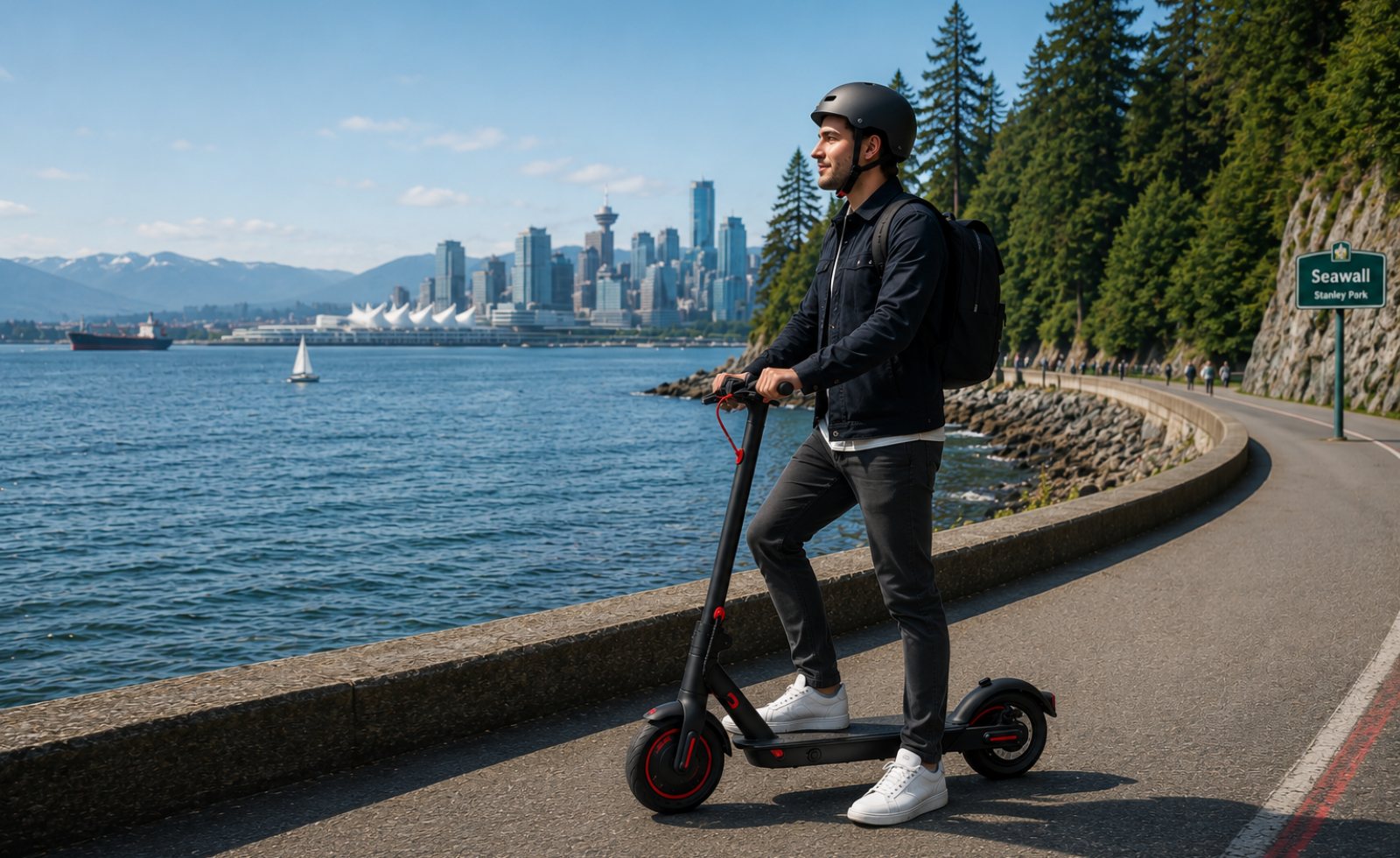
I bought the Lumigo XR7 for one reason—reliable, grab-and-go city rides without hauling a 40–50 lb tank up stairs. After daily commuting-style use (bike lanes, rough patches, curb cuts, short hills), the XR7 feels like a “do the basics right” scooter: stable, easy to live with, and built around practical speed and portability rather than bragging rights.
Quick verdict: Lumigo XR7
What it nails: portability, predictable handling, and a genuinely usable commuter setup for typical U.S. city limits. The 350W motor is tuned for smooth launches, the deck feels solid underfoot, and the whole scooter has a tight, premium feel for the class.
What to know before you buy: this is a lightweight commuter, so you’re trading suspension and big-battery range for a slimmer carry weight. On cracked pavement, you’ll feel it more than you would on heavier, suspension-equipped models.
My rating: it’s a strong value at $949 if your rides are mostly 20–30 km each way and you care about carrying/locking/storing the scooter as much as riding it.
Real-world specs (what it feels like day to day)
- Price: $949
- Motor: 350W (commuter tuned)
- Battery: 280Wh (42V charger)
- Claimed range: 20–30 km (about 12–19 miles)
- Top speed: 25 km/h+ (about 15.5 mph+)
- Weight: 28 lbs
- Frame: aircraft-grade aluminum
- Display: LCD with ride data
- Tires: 8.5-inch pneumatic tires (street tread)
- Brakes: front drum + rear electronic brake (with regenerative braking feel)
- Water resistance: IPX5-level weather protection for commuting in light rain
- Max rider weight: 250 lbs
- Charge time: about 4.5–5.5 hours
- Warranty: 12 months (typical commuter coverage)
Ride quality: stable and confidence-inspiring for a light scooter
The XR7’s biggest strength is how “normal” it feels in motion—in a good way. The steering is calm, the deck has enough usable standing room for a natural stance, and it tracks straight without that twitchy front-end vibe some lighter scooters get.
There’s no suspension here, so comfort comes down to tires and geometry. On smooth bike paths it’s easygoing; on older city streets it’s still manageable, but I naturally slow down and pick cleaner lines. For typical commuter speeds, it feels controlled and predictable.
Range & battery: realistic commuter mileage from 280Wh
The 280Wh pack is sized for daily city errands and commutes, not weekend distance rides. In real use, I treat the XR7 as a 10–14 mile scooter with a comfortable buffer, depending on rider weight, wind, temperature, and how often you’re accelerating from stops.
- Typical real-world range: about 10–14 miles
- Best case (flat, moderate speed): up to ~16–18 miles
- Worst case (cold, hills, heavy rider, max speed): ~7–10 miles
I also like how the XR7 manages the last chunk of battery—performance tapers in a predictable way instead of feeling fine at 20% and then suddenly falling off a cliff.
Speed & hills: commuter-legal pace with smooth power delivery
The XR7 sits in the sweet spot for U.S. urban riding: quick enough to keep up with bike-lane flow, but not a “speed machine” that demands motorcycle-level attention. On flat ground, it holds its ~15–16 mph class pace comfortably.
For hills, the 350W motor does well on mild-to-moderate grades. Steeper hills are doable, but you’ll feel speed drop—especially as the battery gets lower. I found the XR7 shines most when you ride it like a commuter: steady throttle, smooth inputs, and anticipating lights.
Portability: the reason to buy this scooter
At 28 lbs, the XR7 is genuinely carryable. This is the difference between “I can bring it inside” and “I’ll risk locking it outside.” If you’re dealing with apartment stairs, office elevators, or train platforms, that weight class matters every single day.
- Easy one-hand lift for short carries
- Fits under many desks and in smaller entryways
- Less hassle when mixing scooter + public transit
Safety & braking: controlled stops without drama
The XR7’s braking feel is confidence-building. The front drum brake gives consistent stopping power with low maintenance, while the rear electronic brake adds stability and a bit of speed control on gentle descents.
In emergency stops, the XR7 stays composed as long as your tires are properly inflated and you’re not grabbing brake abruptly on wet paint/metal. Like any small-wheeled scooter, you still need to ride defensively—especially in busy downtown intersections.
Tires & maintenance: commuter-friendly choices
I prefer pneumatic tires for daily comfort, and the XR7’s 8.5-inch setup is a solid balance of ride feel and compact size. Keep them inflated and you’ll get better range, fewer pinch-flat risks, and more predictable braking.
- Weekly habit: check tire pressure
- Monthly habit: check fasteners and stem tightness
- Seasonal habit: clean and inspect the charge port gasket and brake response
Weather resistance, display, and app features
For commuting, I care less about flashy lighting patterns and more about “works every time.” The XR7’s LCD display is easy to read at a glance and gives the basics—speed, battery, and ride mode—without fuss.
It also has a simple companion app experience for the essentials: locking functions, basic ride settings, and firmware updates. I’d describe it as helpful, not mandatory—the scooter is fully usable without living in an app.
With its IPX5-level weather protection, the XR7 is comfortable in light rain and wet roads, as long as you ride conservatively and avoid standing water.
Reliability & support: built like a commuter tool
The XR7’s build quality is the first thing people notice when they pick it up—no hollow, toy-like feeling. The aluminum frame feels rigid, the controls feel consistent, and it has the kind of practical finish that holds up to daily handling (folding, carrying, leaning, rolling through lobbies).
Support-wise, the ownership experience is straightforward: a standard 12-month warranty and commuter-typical wear items (tires, grips, brake feel adjustments) that you can stay ahead of with simple routine checks.
Alternatives to the Lumigo XR7 (what I’d cross-shop)
If you’re shopping the XR7, you’re likely comparing it to other commuter scooters in the same “carryable + practical” category.
- Segway Ninebot F2-class scooters: typically heavier, often more feature-packed, and commonly run larger batteries in the 367Wh range for longer rides—at the cost of portability.
- NIU KQi2-style commuters: often offer a planted ride and good lighting, but tend to be bulkier and less stair-friendly.
- Ultra-light premium options: can be even easier to carry, but often sacrifice comfort or real-world range in exchange for sleek design.
For my use (short-to-medium city trips with frequent carrying), the XR7 lands in a very practical middle ground.
Who should buy the Lumigo XR7
- Apartment and transit commuters who need a scooter they can actually carry
- City riders doing mostly short-to-medium trips (20–30 km each way)
- Practical buyers who value predictable handling, simple controls, and a premium-feeling frame
Who should skip it
- Long-range riders who regularly need 18–25+ miles per charge
- Rough-road riders who want suspension for broken pavement
- Steep-hill commuters who expect strong climbing at full speed without slowdown
Final verdict: a smart, lightweight commuter at a fair price
The Lumigo XR7 feels like it was built by someone who actually commutes: it’s light enough to carry without resentment, fast enough for bike-lane flow, and solid enough to feel trustworthy day after day. If your reality includes stairs, offices, transit connections, and locking/storage concerns, the XR7’s portability is a feature you’ll appreciate more than another 5 miles of theoretical range.
If you want a reliable daily city scooter that’s easy to live with, the XR7 is an easy recommendation at $949.
FAQ
How fast does the Lumigo XR7 go?
In normal U.S. commuter use it rides in the 25 km/h+ class (about 15.5 mph+), with smooth acceleration that feels designed for bike-lane speeds rather than top-end racing.
What range can I realistically expect from the Lumigo XR7?
For most riders, expect about 10–14 miles per charge. Flat routes at moderate speed can stretch farther, while cold weather, hills, and max-speed riding will reduce range.
Is the Lumigo XR7 good for hills with a 350W motor?
It handles mild-to-moderate hills well for a commuter scooter, but on steeper grades you’ll feel speed drop—especially at lower battery levels or with heavier riders.
How much does the Lumigo XR7 weigh and is it easy to carry?
It weighs 28 lbs, which is genuinely carryable for stairs, elevators, and public transit. This is one of its biggest advantages over heavier commuter models.
Does the Lumigo XR7 have suspension?
It’s a rigid-frame commuter scooter without suspension. Comfort comes from its pneumatic tires and stable geometry, so you’ll want to slow down on broken pavement.
What kind of brakes does the Lumigo XR7 use?
It uses a front drum brake paired with a rear electronic brake. The setup feels controlled and commuter-friendly, with consistent stopping and low routine maintenance.
Is the Lumigo XR7 water-resistant for commuting in rain?
Yes—its commuter-grade weather protection is suited to light rain and wet roads. Avoid deep puddles and ride conservatively on slick paint, metal plates, and leaves.
How long does the Lumigo XR7 take to charge?
Plan on roughly 4.5–5.5 hours for a full charge with the included 42V charger, which works well for overnight or at-desk charging.