

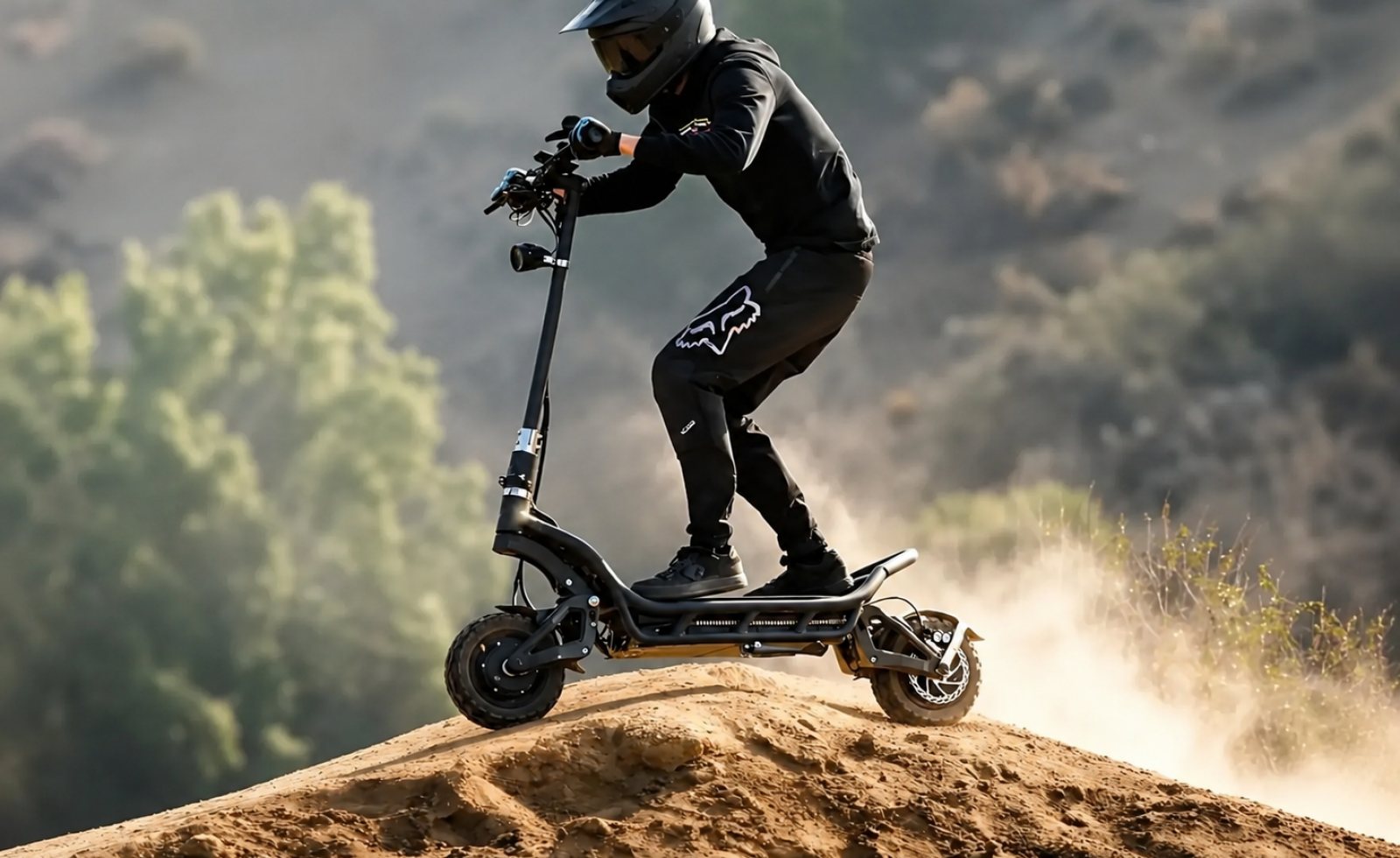
Quick verdict: Is the Nami BURN-E MAX worth it?
Yes—if you want a premium, high-power scooter with a big 72V battery, serious suspension travel, and top-tier braking feel, and you’re realistic about what ownership looks like (setup, tuning, occasional troubleshooting, and parts sourcing).
No—if your priority is portability, truly “set-and-forget” reliability, or you ride in wet weather and expect motorcycle-level sealing without doing any preventative weatherproofing.
My take: The BURN-E MAX’s chassis/suspension/brakes combo is the reason people fall in love with it. The most credible downside theme from owner chatter is not “it rides bad”—it’s that support consistency, water ingress risk, and electronics heat/wiring protection can be hit-or-miss depending on batch, dealer, and how/where you ride.
Nami BURN-E MAX real-world specs (what matters in the US)
- Battery: 72V 40Ah (about 2880Wh)
- Motors: Dual 1500W nominal (high peak output class)
- Top speed (unrestricted markets): commonly tested in the mid-50 mph range for the MAX family; some listings/marketing claim ~59–60 mph
- Range: manufacturer-style “best case” numbers assume low speed; independent testing on related MAX variants lands closer to ~45–50 miles in fast mixed riding
- Suspension: long-travel adjustable hydraulic suspension (this is a defining feature)
- Brakes: hydraulic disc brakes with strong lever feel; 4-piston setups are commonly associated with MAX trims
- Tires: 11-inch tubeless road tires (often CST stock). Many owners upgrade to premium rubber.
- Weight: roughly ~100–105 lb class (expect “two-person lift” reality)
- Water rating: typically presented around IPX5/IP55 class depending on listing/model year; treat as “splash/rain tolerant,” not “stormproof”
Note on naming: In the US, you’ll see BURN-E MAX / Burn-E 2 MAX / Burn-E 3 MAX and retailer-specific trims. The ride philosophy stays the same: big 72V battery, huge power, premium suspension, high-end braking. Confirm the exact battery (Ah/Wh), brake calipers, controller version, and warranty terms from the seller you’re buying from.
Ride quality: why the BURN-E MAX feels special
The reason the BURN-E platform has a cult following is the way it stays composed while doing hyper-scooter things. The frame geometry, long-travel suspension, and steering damper (on many MAX builds) make it feel planted when other scooters start feeling nervous.
What I like most: it doesn’t just smash bumps—it keeps the scooter tracking straight and predictable, which matters more the faster you go. On rough pavement, expansion joints, and patched asphalt, the suspension is the difference between “white knuckle” and “I can ride this for an hour.”
What takes setup time: suspension tuning and control settings. The BURN-E ecosystem is known for lots of adjustability (ride modes, throttle response, regen strength). Out of the box, many riders describe it as aggressive until they dial it in.
Range and battery: what I’d actually plan for
A 72V 40Ah pack is legitimately huge for a scooter, and that’s the BURN-E MAX’s biggest practical advantage—especially if you ride fast and don’t want “range anxiety.”
But range claims can get fantasy-level depending on the test speed. Here’s how I’d plan it in the US:
- Fast mixed riding (30–45+ mph bursts): I’d plan for roughly 35–55 miles depending on rider weight, wind, tire pressure, and how often you’re pinning it.
- Moderate cruising (20–30 mph): 50–80 miles is realistic for many riders.
- Slow/efficient riding (near bike-path speeds): you can push higher—but that’s not why most people buy this scooter.
Battery care tip: If you’re spending hyper-scooter money, treat the battery like the asset it is: avoid storing at 100% for long periods, don’t cook it in a hot car, and keep an eye on charge habits. If you use fast charging, do it because you need it—not because you can.
Speed and hills: brutally capable (and that’s the point)
The BURN-E MAX is for riders who want motorcycle-adjacent acceleration without stepping up to an e-moto. Dual high-power motors and high-voltage controllers give it that “endless pull” feel up hills that stop lesser scooters.
High-speed reality check: anything north of ~40 mph demands real protective gear, real braking discipline, and a willingness to maintain the scooter. Even owners who love the platform often acknowledge that ultra-high-speed riding exposes the weak points of any scooter—tires, bolts, heat management, wiring protection, and rider skill.
Portability and weight: the dealbreaker for a lot of buyers
This is the part I never sugarcoat: the BURN-E MAX is heavy. It’s not “carry up stairs daily” heavy—it’s “plan your storage and loading strategy” heavy.
- If you have stairs: I would not buy this unless you have help, a ramp solution, or you’re okay with leaving it ground level.
- If you drive to ride: measure your trunk opening and plan how you’ll lift ~100+ lb safely.
- Folding: folding helps for storage, but it doesn’t turn it into a portable scooter.
Safety and braking: a standout strength
On MAX trims, the braking setup is one of the best reasons to pick this scooter over cheaper “60 mph” options. Strong hydraulic brakes with big rotors and good calipers matter because this scooter can reach speeds where mediocre brakes are simply unacceptable.
My preferred setup for real riding:
- Dial regen to a level that doesn’t upset traction on imperfect pavement
- Keep pads bedded-in and rotors clean
- Upgrade tires before chasing more speed
Important: If you’re not comfortable maintaining hydraulic brakes (or paying a shop to), you should budget for that from day one.
Tires and maintenance: tubeless helps, but plan to tinker
11-inch tubeless tires are a great match for a high-speed scooter—better rollover, more stability, and fewer “tube pinch” problems. Still, flats happen, and tubeless repair is a skill you’ll want (plugs, proper inflation, checking for bead seating).
Common owner upgrades:
- Premium tires for better grip and high-speed confidence
- Steering damper tuning (and keeping an eye for leaks/feel changes)
- Fasteners check after early rides (this is standard hyper-scooter practice)
Reliability, waterproofing, and support: the honest owner conversation
Most credible feedback splits into two truths that can both be true:
- Truth #1: The chassis, suspension, and ride feel are legitimately top-tier for the price class. Many owners put big miles on BURN-E scooters and keep them because nothing else rides quite the same.
- Truth #2: Some owners report frustrating failures (controllers, wiring, displays/lights), water ingress concerns, and inconsistent support experiences depending on where they bought and who handled service.
My practical advice for US buyers:
- Buy from a seller with a real service pipeline (parts access + a shop that will actually touch the scooter).
- Assume you’ll do light wrenching: tightening, brake adjustments, tire pressure checks, basic diagnostics.
- Don’t trust IP ratings like a submarine rating. If you ride in rain, consider preventative sealing and extra protection for exposed wiring/entry points.
Warranty note: Warranty terms can vary by distributor/region. Some distributors explicitly exclude consumables and limit coverage duration on electrical/mechanical components, and warranties are commonly non-transferable. Read the seller’s terms carefully before you assume you’re covered.
Nami BURN-E MAX vs alternatives (what I’d cross-shop in the US)
If you’re shopping the BURN-E MAX, you’re typically choosing between “best ride feel” and “best turnkey durability/service network.” Here are the common directions I’d look:
- Kaabo Wolf King GT / similar Kaabo hypers: often cross-shopped for top speed and big power; different suspension feel and ergonomics.
- Segway GT2 class: usually more polished as a product experience, but different value proposition on serviceability and mod culture (and often different weight/price tradeoffs).
- VSETT 11+ class: popular power scooter alternative; different ride character and parts ecosystem depending on seller.
If your priority is comfort + control at speed: the BURN-E MAX stays on the shortlist.
If your priority is “least drama ownership”: consider a more mainstream platform with stronger dealer support and fewer owner-reported electronics drama stories.
Who should buy the Nami BURN-E MAX?
- Experienced riders who want hyper-scooter speed with premium ride quality
- Riders who prioritize long rides and want a truly big battery
- Buyers who enjoy (or at least accept) tuning, maintenance, and occasional troubleshooting
- People with safe storage (garage/ground floor) and a plan for moving a heavy scooter
Who should skip it?
- Anyone who needs portability (stairs, public transit, lifting daily)
- New riders who haven’t built throttle/braking discipline yet
- People who expect car-like waterproofing and ride in heavy rain without prep
- Buyers who want a scooter that’s easy to service at any local shop
Final verdict
The Nami BURN-E MAX is one of those scooters that makes sense the moment you ride it hard: stable, confident, and shockingly comfortable for how fast it is. If you buy it with the right expectations—heavy, expensive, high-maintenance compared to commuter scooters—and you purchase through a seller with good parts/service support, it can be a dream machine.
My rating reflects the consensus: world-class performance and ride quality, held back mainly by ownership risk factors (support consistency, water/heat/electronics concerns, and the sheer practicality hit from the weight).
FAQ
How fast does the Nami BURN-E MAX go in the United States?
On unrestricted settings, MAX-family models are commonly tested in the mid-50 mph range, and some seller listings claim around 59–60 mph. Actual speed depends on settings, rider weight, battery voltage, wind, and tires.
What real-world range can I expect from the Nami BURN-E MAX (72V 40Ah)?
Plan roughly 35–55 miles for fast mixed riding, and 50–80 miles at moderate cruising speeds. Riding near top speed most of the time can cut range dramatically.
Is the Nami BURN-E MAX good for commuting?
It can be, but it’s best for long, fast commutes where you have secure ground-level storage. If you need portability, stair-carrying, or easy indoor storage, it’s a poor commuter choice.
How much does the Nami BURN-E MAX weigh?
It’s in the ~100–105 lb class depending on version. In practice, it’s not a one-hand carry scooter—expect two-person lifting or ramps for vehicle loading.
Is the Nami BURN-E MAX waterproof or safe to ride in rain?
It’s typically marketed with an IPX5/IP55-type rating (splash/rain tolerant), but owners frequently treat it as “water resistant, not waterproof.” If you ride in rain, preventative sealing and protecting exposed entry points is smart.
What are the most common owner complaints about the BURN-E MAX platform?
The most repeated themes are electronics fragility (controllers/displays/lights), water ingress risk in certain areas, exposed wiring vulnerability, and inconsistent support experiences depending on dealer.
Does the Nami BURN-E MAX have good brakes?
Yes—MAX trims are known for strong hydraulic disc braking feel. Still, performance depends on setup (pad bedding, rotor alignment) and ongoing maintenance.
What should I check before buying a Nami BURN-E MAX in the US?
Confirm the exact trim (battery Ah/Wh, brake calipers, controllers), seller warranty terms, service/parts availability, included charger(s), and whether the scooter is speed-limited for compliance.